
A fresh spell of heatwave is likely to begin over northwest India from May 7 and over central India from May 8, the India meteorological department said on Thursday.

Prayagraj is a must-visit place in 2025, but in January and February you can't miss the Maha Kumbh, a spectacular event like no other.
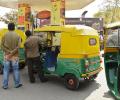
The government has slashed by up to a fifth the supplies of cheaper gas to city gas entities that retail CNG to automobiles, increasing their dependence in costly imported fuel. Buying costly imported gas to make up for the shortfall should result in a hike in CNG price but given the ensuing assembly elections in Maharashtra, that may be put off for now. Indraprastha Gas Ltd and Mahanagar Gas Ltd in regulatory filings stated that supplies of domestically produced gas, which was available at a capped rate which is half of the imported price, has been cut.

The tea industry's cup of woes brimmeth - scanty rainfall and pest attacks have dragged down production in May, prices are lower than last year, and demand from some export markets is muted. Production in North Bengal - comprising the Dooars, Terai, and Darjeeling - is majorly affected; parts of Assam are also hit. Arijit Raha, secretary general, Indian Tea Association (ITA), said that the Tea Board numbers for April show a crop loss of about 9 per cent for North Bengal, compared to last year.

The heat wave has caused havoc and triggered an emergency situation in major hospitals of the province.
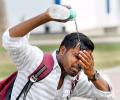
Heatwave conditions have been prevailing in Odisha since April 15 and the Gangetic West Bengal since April 17, according to the MeT department.

Ahead of the seven-phase Lok Sabha elections, keeping food prices under check has emerged as one of the topmost priorities for the government. Food prices would likely have a bearing on the preferences of voters. In the past, there have been instances when governments have been voted out over rising food inflation.

The BJP is leaning on Yogi's 'batenge to katenge' theme to weave a unifying narrative that transcends caste and communal lines.

Gaps in enforcement, limited monitoring, and easy access to firecrackers from the NCR region where restrictions were slack were largely responsible for the widespread flouting of the cracker ban in Delhi on Diwali, experts have opined.

Saudi Arabia said on Sunday that as many as 1,301 people died during the Hajj pilgrimage, with 'numerous cases' due to heat stress and 'unauthorised' trips accounting for over four out of five of the deaths, CNN reported.

The Silence 2: The Night Owl Bar Shootout actor has been adding excitement to her closet with pops of red, brown and gold.

With wheat harvest going on in many states, experts feel that the sudden rise in mercury is going to affect the late sown crops, putting a dent on the overall production of the food grain.

Monday was a busy day for film folk, and we tell you just how they spent it.

Apart from the human body, human food will bear direct repercussions. From staples such as wheat, to coffee, dairy, and even the great Hilsa face the threat of reduced supply due to the extreme heat.

The finance ministry on Thursday raised concerns over the possible impact of El Nio conditions on India this year, saying if recent forecasts came true, the country could see lower agricultural output and higher inflation. "Some meteorological agencies predict the return of El Nio conditions in India this year. "If these predictions are accurate, then monsoon rains could be deficient, leading to lower agricultural output and higher prices," the ministry said in its monthly economic review.

The plea, filed by Delhi's water minister Atishi, has made the Centre, Bharatiya Janata Party-governed Haryana and Congress-ruled Himachal Pradesh parties to the petition and said access to water is essential for survival and one of the basic human rights.

Labour union leader Shrirang Barge said the state government would have known Dharmadhikari has a massive following and that the event would have attracted several lakh people, so why were arrangements for water, shade etc, missing.

As we burn under this year's HOT summer, here are some easy tips to help you combat some common heat-related problems.

Eleven more patients admitted at Uttar Pradesh's Ballia district hospital have died due to various ailments on Monday, taking the death toll to 68 in five days, officials said.

The heat wave is likely to impact parts of Jammu and Kashmir, Himachal Pradesh, Uttarakhand, Punjab, Haryana, Delhi, Rajasthan, Madhya Pradesh, Jharkhand, Odisha and Gangetic West Bengal, the Met office said.


'Keeping the global temperature below not just 1.5 degree Celsius, even 2 degree Celsius is beyond our reach now. Both are impossible.'

'When you watch Freedom At Midnight, I want you to feel like you are sitting on a ticking time bomb.'

How the pachyderms at the Elephant Rescue and Rehabilitation Centre in Tiruchirappalli are cooling off.

Frequent weather shocks caused by climate change pose challenges for the monetary policy as well as downside risks to economic growth, a Reserve Bank report said. Global average temperatures are on a rise, with accompanying increase in extreme weather events (EWE), and the economic and social impact of global warming is becoming increasingly evident, said RBI's Monetary Policy Report - April 2024. The report said that climate change has increased the frequency and ferocity of weather shocks, posing challenges for monetary policy.

Vidhya Pant remembers the Diwalis celebrated in her home in Shillong in the 1960s.

China's Yang Jiayu claimed gold in the women's 20km race walk at the Paris Olympics on Thursday.
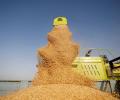
Temperatures in March will be critical to determining the impact of any unusual heatwave conditions on this year's wheat crop in North India. It is that time of the year when the crop enters its vital grain-filling stage, say meteorologists and crop experts. So far, the high day temperatures in the North are not believed to have any significant impact on the final yields since the crop hasn't entered a stage where heat affects yields.

Amid water crisis in the city, Bengaluru Water Supply and Sewerage Board (BWSSB) has banned usage of potable water for non-essential purposes and those found violating the prohibitory order would be fined Rs 5,000.
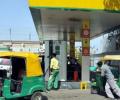
Prices of natural gas, which is used to generate electricity, make fertiliser and is converted into CNG to run automobiles, is likely to rise to record levels at the rate review scheduled this week, sources said. The government-dictated price for natural gas produced in the country is to be revised on October 1. After factoring in the spike in energy prices witnessed in recent months, the rate paid for gas produced from old fields such as of state-owned Oil and Natural Gas Corporation (ONGC) is likely to rise to $9 per million British thermal units from current $6.1.
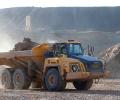
India needs to recognise and address challenges posed by its dependence on China for critical minerals and examine the implications of phasing down coal on bank balance sheets as it accelerates its green transition, the government's Economic Survey 2023-24 tabled in Parliament on Monday said. As part of its national plan to contribute to meeting the global goal of limiting the average temperature rise to 1.5 degrees Celsius, India has committed to reducing emissions by 45 per cent below 2005 levels by 2030, achieving 50 per cent cumulative electric installed capacity from non-fossil fuel-based energy resources, and creating a carbon sink of 2.5 to 3 gigatons of CO2 equivalent through additional forest and tree cover.

A peek into the life of a public-sector banker who did well professionally, but paid a price for it, points out Tamal Bandyopadhyay.
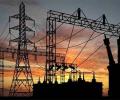
With the cooling down of heatwaves as the monsoon spreads across the country, power demand has fallen by 12.5 per cent from the start of this month till Monday. Peak power demand of the country had touched a record of 210 Gw last week, mostly due to rising temperatures and opening up of the economy. Compared with the beginning of this month, almost all states have seen a fall in power demand. Punjab, however, is an exception where the power demand on Monday was 17 per cent higher than on June 1.

The Federation of Automobile Dealers Associations (Fada) has raised concerns over the rising inventory levels of four-wheelers at dealerships which have now reached a 60-day stockpile or around 550,000 units. This situation could mean a significant financial burden on dealerships due to the additional interest cost for the extended holding period. These 60-day inventory levels are nearing the 2018-19 levels when inventory days had approached 70 days, leading to the closure of around 282 passenger vehicle dealerships.
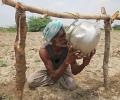
Northwest, central and east India are predicted to record maximum temperatures three to five degrees above normal over the next five days, the India meteorological department (IMD) said on Thursday.


This is for the second time this month that Mumbai has recorded the highest maximum temperature in the country.

The rains could lead to a rise in the water levels of the Yamuna, which has been flowing above the danger mark of 205.33 metres for days now.

The Reserve Bank of India (RBI) has identified "climate shocks" as a risk to food inflation rates and overall price rise while stating that the outlook for the country's economic growth remains bright. In its Annual Report for 2023-24, released on Thursday, the central bank said easing supply-chain pressures, broad-based softening in core inflation, and early indications of an above-normal southwest monsoon meant well for the inflation outlook in 2024-25. "The increasing incidence of climate shocks, however, imparts considerable uncertainty to the food inflation and overall inflation outlook," said the RBI while noting headline inflation moderated by 1.3 percentage points on an annual average basis to 5.4 per cent in 2023-24.

The central government plans to increase the number of highly beneficial neem trees in the country from the existing one tree for every 50 Indians to one tree for every 10 Indians to meet the rising demand from different sectors for neem oil. Presently, India has 18-20 million neem trees in the country, of which 40-45 per cent are in Uttar Pradesh, followed by Maharashtra, Rajasthan, and Tamil Nadu, among others. To achieve the target, the number of neem trees has to rise to almost 140 million.
